
Requirement review
Drawing, application, quantity and acceptance criteria are organized into a review checklist.
Precision Glass Manufacturing
ANTGLASS manufactures drawing-based windows, substrates, wafers, covers and custom precision glass components through cutting, CNC machining, drilling, grinding, polishing, cleaning and inspection.
Choose Your Project Route
Enter through the requirement, process, material or finished component. Each route connects back to drawing review and quotation.
Match the drawing, application, material, process route, inspection and supply stage.
Explore route → Start with the processReview cutting, CNC machining, drilling, grinding, polishing and inspection capabilities.
Explore route → Start with the materialCompare borosilicate, fused silica, optical, aluminosilicate and specialty grades.
Explore route → Start with the componentBrowse windows, substrates, wafers, covers, filters, discs, rings and custom components.
Explore route →Featured Solutions
Start with the project challenge, then connect the material, process route, inspection and supply stage.
View all solutions →Core Products
Representative component families for optical, electronic, laboratory and industrial assemblies.
View all products →Core Processing
The home page shows the six principal manufacturing routes. Detailed material, geometry and application combinations remain in the Processing Hub.
Multi-axis machining for slots, holes, contours and tight-tolerance technical glass parts.
View capability → 02Drawing-based cutting for plates, discs, wafers, rods, tubes and custom profiles.
View capability → 03Through holes, countersinks and patterns reviewed for edge distance and crack risk.
View capability → 04Ground, beveled, chamfered and polished edges for handling, sealing and optical appearance.
View capability → 05Flatness, parallelism and surface preparation for precision glass and optical components.
View capability → 06Tube length cutting, end finishing and inspection for laboratory and industrial assemblies.
View capability →Glass Materials
Material selection is connected to transmission, thermal exposure, thickness, chemical resistance, strength, finished geometry and the available processing route.
Applications
Application routes connect the operating environment to the glass material, geometry, surface and inspection requirements.
Optical windows, protective covers and filter components for cameras, scanners, inspection systems and machine-vision assemblies.
Explore →Glass wafers, carrier wafers, substrates and packaging components for sensors, MEMS devices and advanced electronic assemblies.
Explore →Precision windows, prisms, fused-silica components and specialty optical materials for laser and photonics systems.
Explore →Slides, cover glass, cuvettes, flow-cell parts, windows and cleaned components for imaging, analysis and laboratory instruments.
Explore →Sight glass, gauge glass, viewing windows, tubes and heat-resistant components for process and production equipment.
Explore →Low-expansion substrates, optical windows and stable glass-ceramic components for measurement, alignment and reference systems.
Explore →Prototype to Production
The project route keeps the drawing, material, process, inspection and packaging requirements connected from review to repeat production.
Drawing, application, quantity and acceptance criteria are organized into a review checklist.
Named grades and alternatives are compared using documented properties and supply form.
Cutting, CNC, drilling, grinding, polishing, cleaning and inspection steps are sequenced.
Critical geometry and surface requirements are checked before repeat production.
Inspection points, handling and packaging are applied to the approved requirement set.
Quoted scope, inspection records and packaging requirements are matched to the order.
Manufacturing Evidence
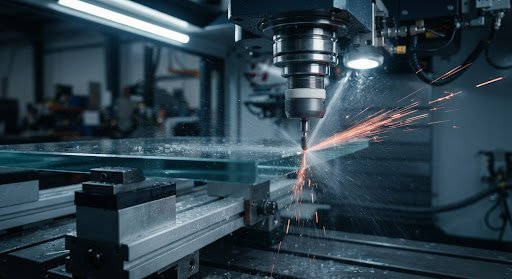
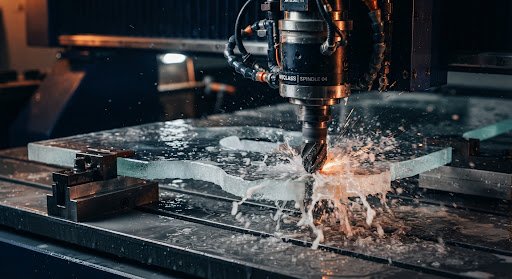
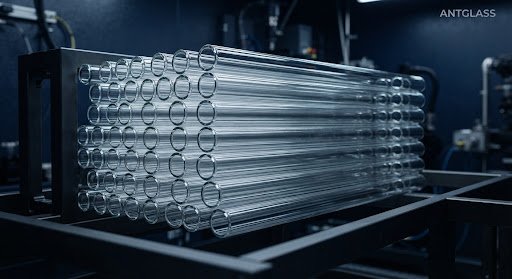
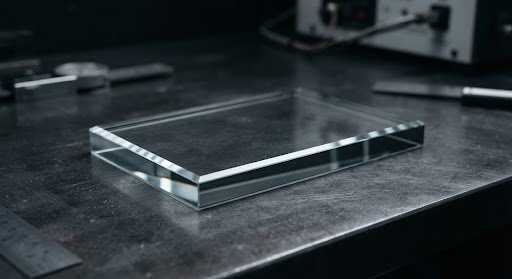
Real process imagery helps buyers understand how cutting, CNC machining, finishing and inspection connect to the component drawing.
RFQ Readiness
Critical dimensions, datums, holes, slots, edge conditions and acceptance methods are organized before quotation.
Glass grade, thickness, transmission, flatness, finish, coating and operating environment are reviewed together.
Inspection points, handling, separators, trays, bags and documentation are matched to the component risk.
Technical Library
Use practical drawing, tolerance, edge and drilling guides before quotation.
Explore Technical Library →Drawing Review
Send the current drawing, preferred material, target quantity, critical dimensions, surfaces, application and inspection needs.
RFQ / Contact
Provide detailed specifications for your industrial glass requirements. Our engineering team reviews all submissions for material, processing and tolerance feasibility.